Cenit
A little sky over Buenos Aires.
- discoveries across birds, insects, flora, sky and weather
- 79
- stars from the Yale Bright Star Catalogue
- 5,080
- automated tests protecting the world
- 1,100+
A sky worth staying with.
Cenit brings together my interest in nature, astronomy, visual art and interactive worlds. The starting point is personal: lying in the grass, looking up and listening, with enough time for something unexpected to happen. The camera stays still, trees frame the edges and the centre stays open for watching.
Drag the sky. Keep the moment.
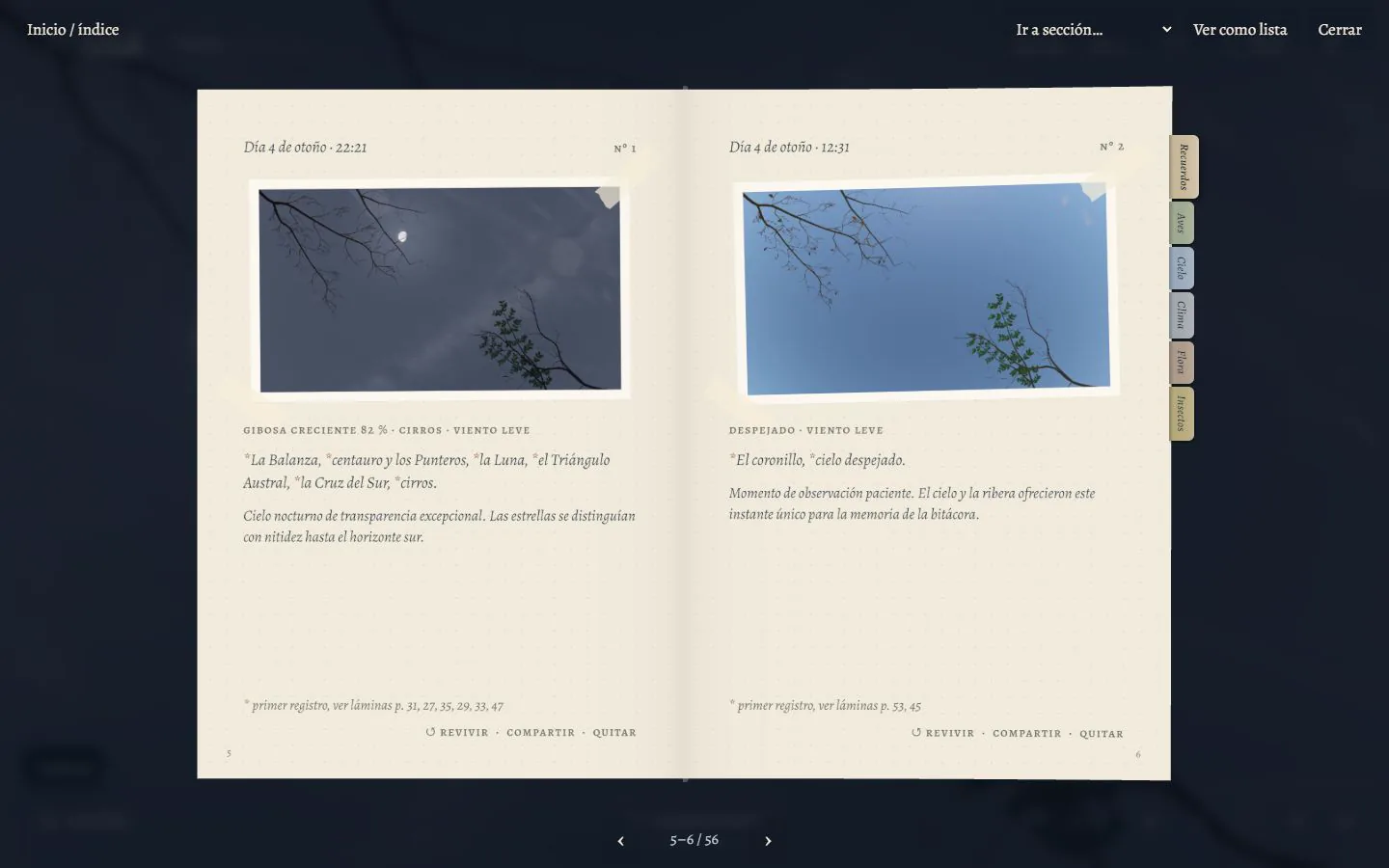
Dragging across the full width of the screen moves six hours; on release, time returns to its slow pace. Saving keeps the whole moment: every subject in frame, the light and the sky that holds them. Each first sighting opens an entry in the notebook, and tapping a subject makes it the protagonist of the photo. A memory can be replayed, shared as a reproducible link or sent as a postcard and video.
The sky is a map.
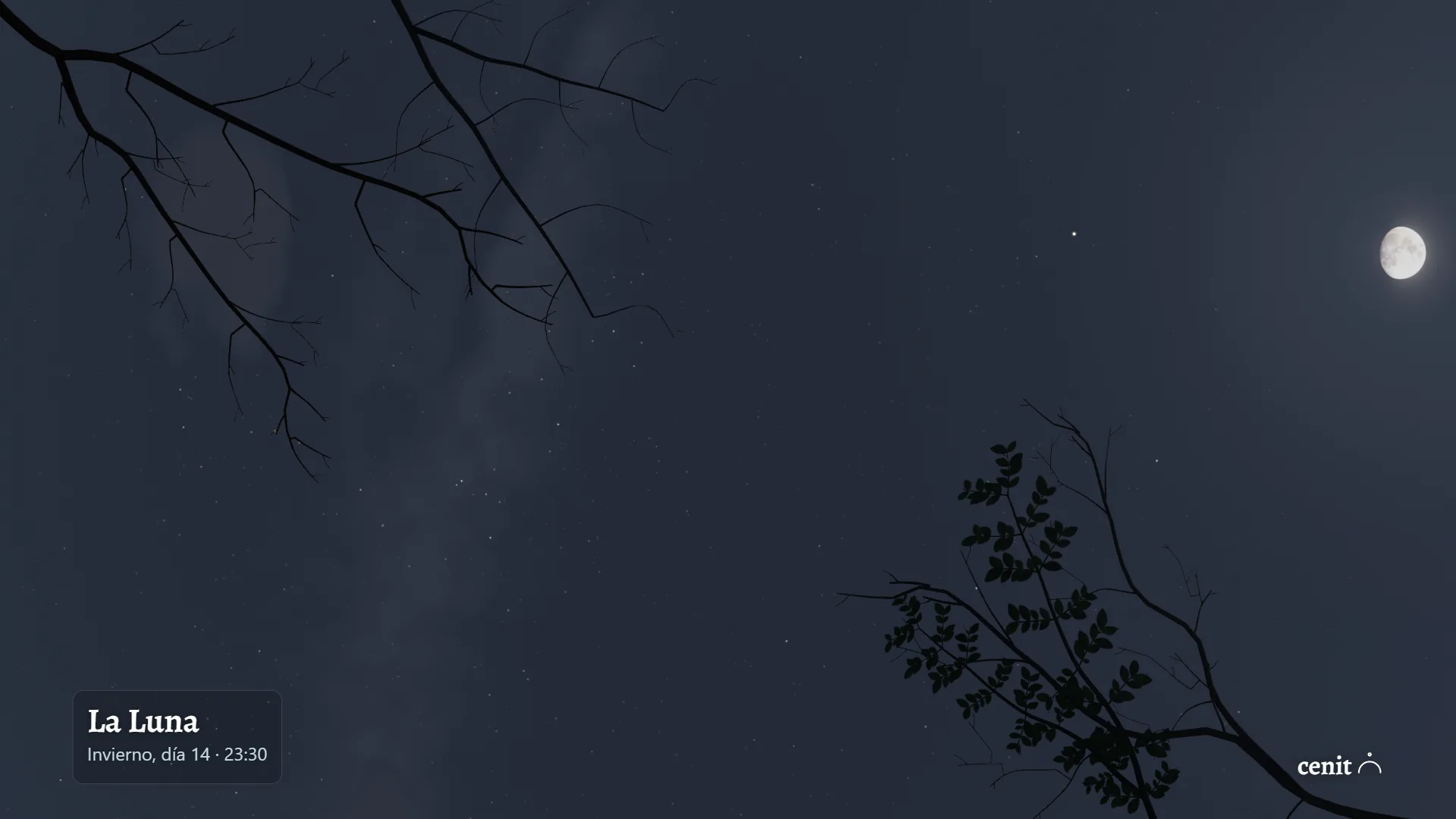
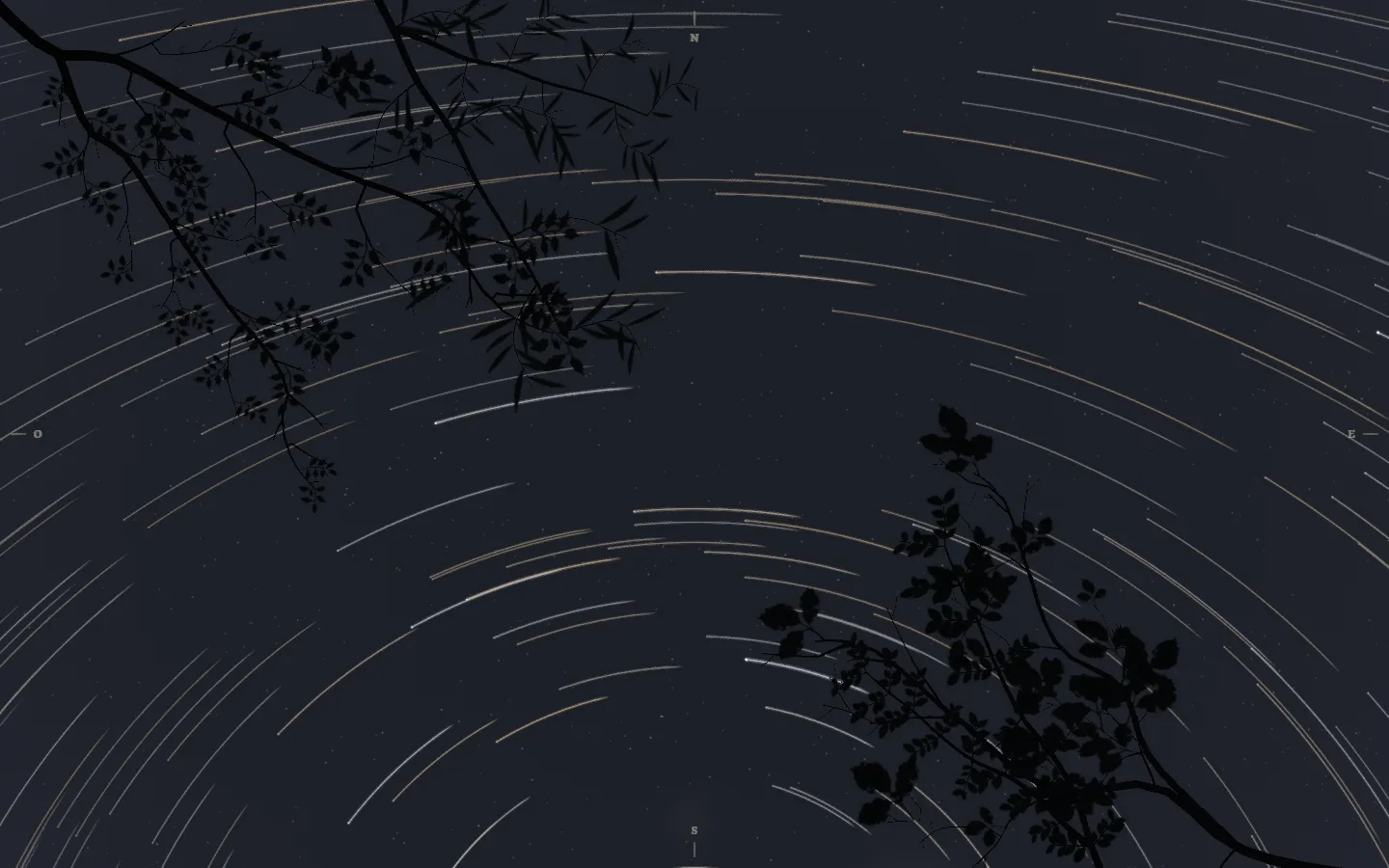
Cenit looks at the zenith of Buenos Aires, 34.6° south, through a stereographic projection, the one used in sky charts. The centre of the screen is directly overhead and the edge is the horizon. The Sun, the Moon and 5,080 catalogued stars are placed for the date and hour of Cenit’s own calendar, with phases and eclipses. At night, a long exposure draws star trails around the south celestial pole.
The air, and what lives in it.
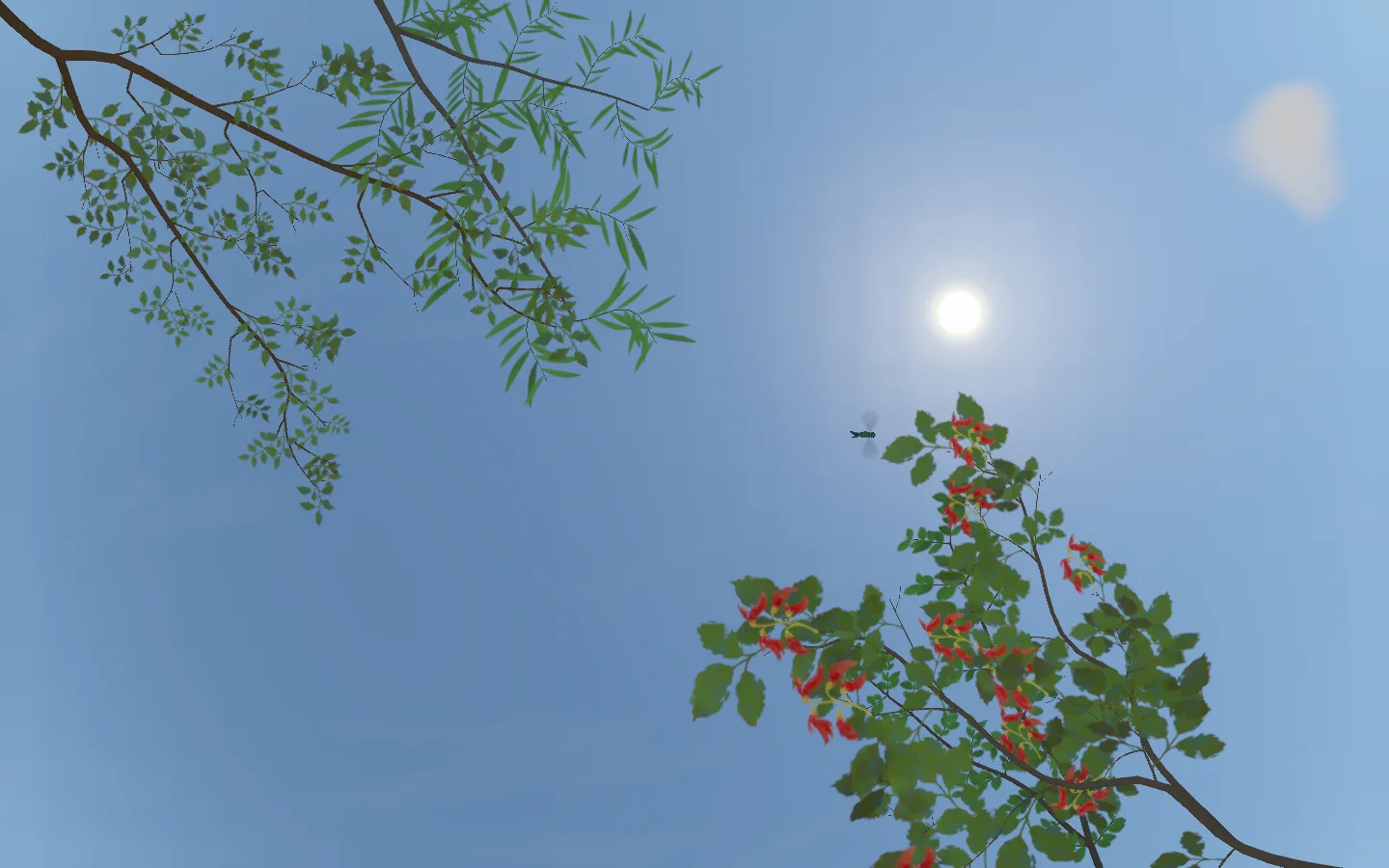
Light, atmosphere and weather are computed together. Cloud layers travel on different winds at each height, form and dissolve, and let rays through only where there are real gaps between clouds and branches. Birds, insects and native trees of the Río de la Plata respond to hour, season and weather: a caracara rides a thermal, two doves trade places on a branch, a hummingbird and bees share the flowering ceibo. Each encounter has an entrance, an intention and an exit instead of a looping animation.
Data, approximation, composition.
Every encounter in the catalogue is audited against sources such as Argentina’s national biodiversity system, Cornell, NASA and the World Meteorological Organization. Each trait is labelled as documented data, a physical or anatomical approximation, or a compositional choice. The native trees are an example: willow leaves and the forms of tala, ceibo and coronillo follow references, while leaf density and wind amplitude serve the frame. Rates and timings are tuned for contemplation and never claim to measure real abundance.
Building the tools to build the sky.
Three.js, custom WebGL shaders and TypeScript draw the world. Simulation and image run on separate clocks, so automatic quality can lower detail without changing what happens. A unified studio sets the hour, weather and encounters, and a director tool produces trailers in 16:9, 9:16, 1:1 and 4:5. Cenit works offline once loaded, and every release checks its weight budgets.
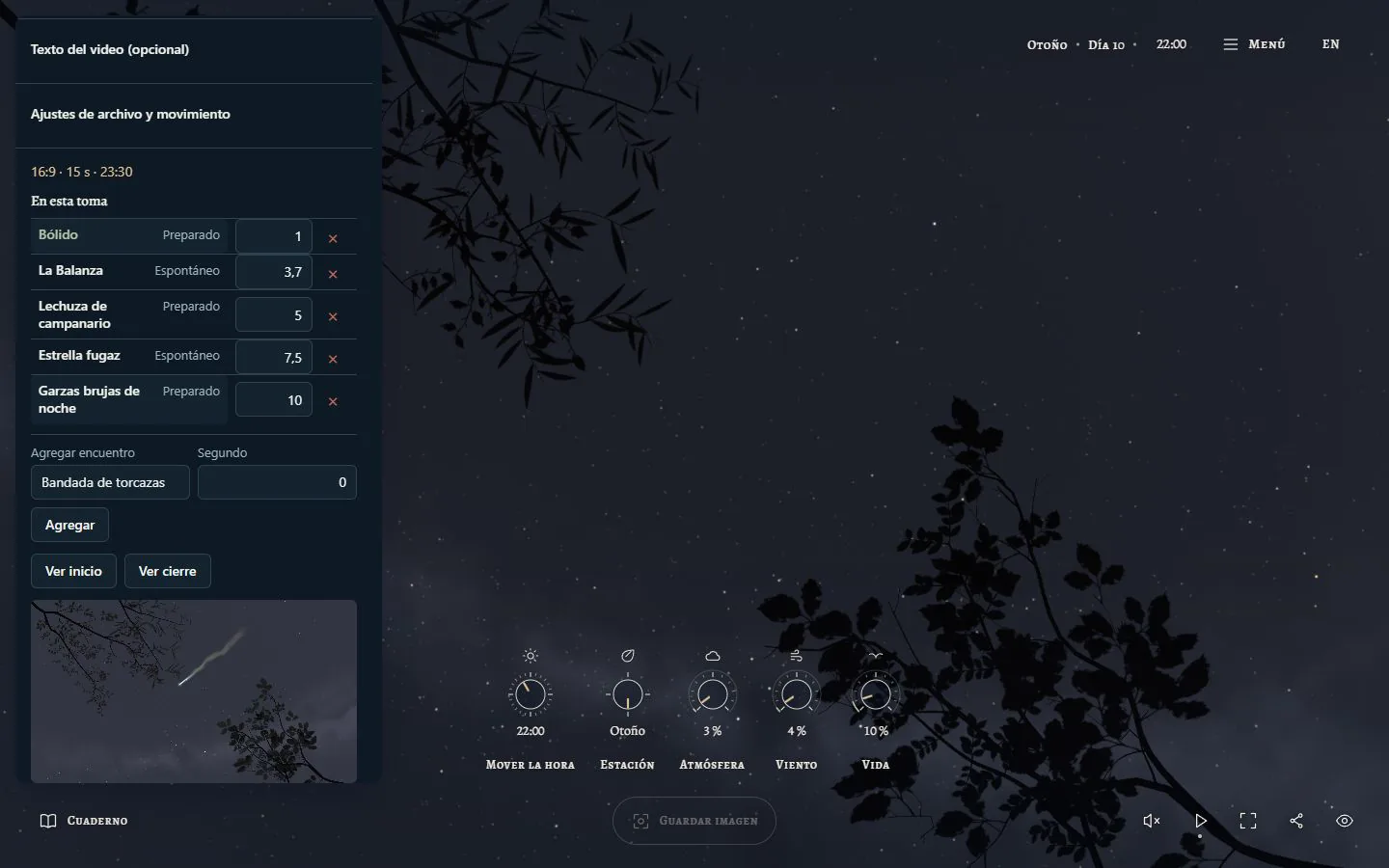
Two decisions behind the experience
Every moment can be rebuilt. A changing world is hard to compare and harder to share. Seeds and deterministic trajectories let the notebook, a link or a video return to the exact same instant at 24, 30 or 60 fps.
Observation before controls. Interface competes with the sky. While dragging, a compact readout lets the pointer through; after the first memory, the interface steps back when idle, and “landscape only” removes it entirely.
An ongoing work. A place to return to.
Cenit keeps growing through observation, testing and visual iteration. The work is as much about choosing what to leave quiet as deciding what to simulate.
Experience Cenit Back to selected work